
Recipe Notes
Why this works
Potatoes need a longer roast than salmon, so they start first. Salmon and green vegetables join late, then lemon and herbs bring the whole pan back to brightness.
Small potatoes
Halved baby potatoes or fingerlings roast faster and finish closer to the salmon timing.
Salmon fillets
Individual 5- to 6-ounce fillets cook predictably; a large fillet may need a few extra minutes.
Asparagus or green beans
Both cook quickly enough to join the pan with the salmon.
Dijon and lemon
Mustard helps the topping cling, while lemon tastes freshest when part of it is saved for the finish.
Start Here
Let the potatoes go first
Sheet pan salmon and potatoes only works when the pan respects the clock. Potatoes need time to soften and brown. Salmon needs a much shorter roast so it stays tender instead of chalky.
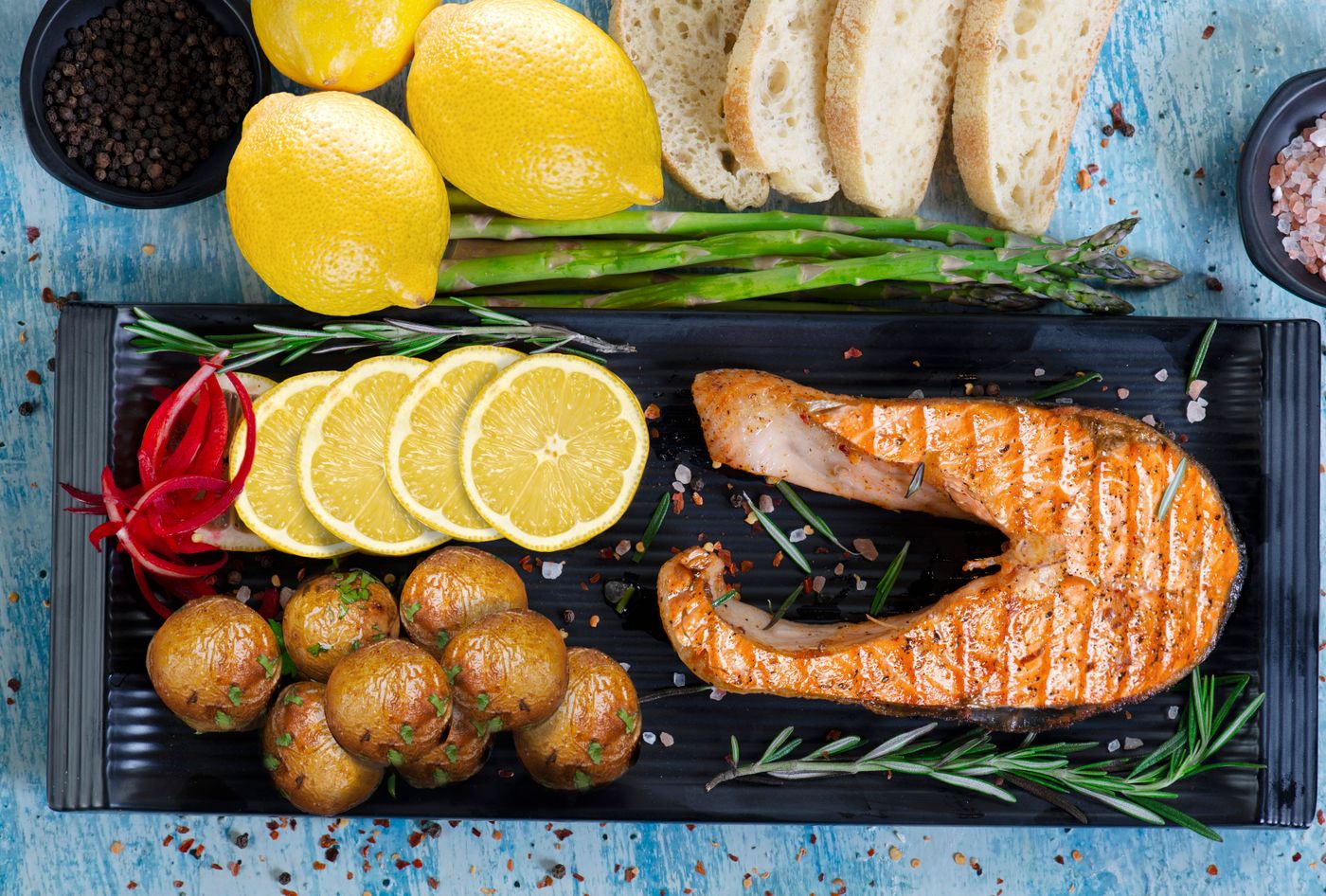
This Hearth Table version gives the potatoes a head start, then brings in salmon, asparagus or green beans, lemon, mustard, and dill at the end. It is a complete dinner on one pan, but it does not pretend that every ingredient cooks at the same speed.
The short answer
Roast the potatoes first at 425 F until they are nearly tender, then add dry salmon fillets and quick-cooking green vegetables for the final 8 to 12 minutes. Finish the hot pan with lemon, herbs, and butter or olive oil so the potatoes taste bright and the salmon stays tender.
Ingredients
What you need
For the sheet pan
- 1 1/2 pounds baby Yukon Gold or small red potatoes, halved or quartered if large
- 2 tablespoons olive oil, divided
- 1 1/4 teaspoons fine salt, divided, plus more to taste
- 1/2 teaspoon black pepper, divided
- 1 teaspoon garlic powder, divided
- 1 pound asparagus or green beans, trimmed
- 4 salmon fillets, 5 to 6 ounces each, skin-on or skinless
- 1 tablespoon Dijon mustard
- 1 tablespoon mayonnaise or plain Greek yogurt
- Zest of 1 lemon
- 1 teaspoon honey, optional
- 1/2 teaspoon smoked paprika
For finishing
- 2 tablespoons melted butter or olive oil
- 1 to 2 tablespoons fresh lemon juice, to taste
- 2 tablespoons chopped fresh dill or parsley
- Lemon wedges, for serving
Method
Roast in two rounds
- Heat the oven. Set the oven to 425 F. Line a rimmed half sheet pan with parchment paper.
- Start the potatoes. Toss the potatoes on the pan with 1 tablespoon olive oil, 3/4 teaspoon salt, 1/4 teaspoon black pepper, and 1/2 teaspoon garlic powder. Arrange them cut-side down where you can. Roast for 25 minutes.
- Mix the salmon topping. While the potatoes roast, pat the salmon dry. Stir together the Dijon, mayonnaise or yogurt, lemon zest, honey if using, smoked paprika, 1/4 teaspoon salt, 1/4 teaspoon black pepper, and the remaining 1/2 teaspoon garlic powder.
- Season the green vegetables. Toss the asparagus or green beans with the remaining 1 tablespoon olive oil and 1/4 teaspoon salt.
- Add the salmon. Pull the pan from the oven. Stir the potatoes and check one with a fork; it should be close to tender. Push the potatoes to one side, add the salmon skin-side down if it has skin, and arrange the green vegetables around it. Spread the mustard mixture over the top of the salmon.
- Finish roasting. Return the pan to the oven for 8 to 12 minutes, depending on salmon thickness. The salmon should reach 145 F, or the flesh should be opaque and separate easily with a fork.
- Dress the pan. Stir the melted butter or olive oil with lemon juice and herbs. Spoon it over the potatoes and vegetables, then serve the salmon with lemon wedges.
Cooking Notes
The small choices that keep dinner steady
Cut potatoes small
Potatoes are the timing risk. Halve small potatoes and quarter larger ones so they are nearly tender before the salmon joins the pan.
Dry the salmon
Patting the salmon dry helps the mustard topping cling and keeps extra water from steaming the surface.
Use the thermometer if you have one
Official guidance is 145 F for salmon. If your fillets are thin, start checking early so they do not overshoot while the vegetables finish.
Finish after roasting
Fresh lemon and herbs taste brighter at the end. If they cook the whole time, the flavor gets quieter.
Timing Map
Add each ingredient when it can actually finish well
| Ingredient | When it goes on | What you are looking for |
|---|---|---|
| Potatoes | At the start | Cut sides browned and centers almost tender before the salmon joins. |
| Broccoli, if using | About 15 minutes into the potato roast | Edges starting to brown, stems still sturdy. |
| Asparagus or green beans | With the salmon | Bright green and tender, not collapsed. |
| Salmon | Final 8 to 12 minutes | Opaque flesh that separates easily, or 145 F in the thickest part. |
| Lemon and herbs | After roasting | Fresh flavor instead of cooked-down, quiet lemon. |
Safe Swaps
What you can change
| Swap | Works? | What to watch |
|---|---|---|
| Asparagus or green beans | Yes | Both cook quickly with the salmon. Thick asparagus may need a few extra minutes. |
| Broccoli florets | Yes, with timing | Add broccoli after the potatoes have roasted for about 15 minutes, then add salmon later. |
| Sweet potatoes | Possible | Cut small and expect a softer texture. They may need a slightly longer head start. |
| Frozen salmon | Yes, thawed first | Thaw in the refrigerator, then pat very dry before seasoning. |
| One large salmon fillet | Yes | It may need a few more minutes than individual fillets. Check the thickest part. |
| No mustard | Yes | Use olive oil, lemon zest, garlic powder, paprika, salt, and pepper instead. |
Storage
Fish leftovers need a little respect
This dinner is best the night it is made. If you have leftovers, cool them promptly and store the salmon, potatoes, and vegetables in a covered container in a refrigerator at 40 F or below.
For best quality, use leftover salmon within 1 to 2 days. General leftover guidance allows 3 to 4 days when food has been cooked and chilled safely, but fish texture is usually better earlier. Cold leftover salmon is often better on a salad or bowl than aggressively reheated.
If you are unsure how gently to warm it, use the reheating guide for the general 165 F leftover rule, then keep the salmon portion as gentle as possible so it does not dry out.
Leftover Plan
Make lunch quiet, not fishy
Salmon reheats fast and can dry out, so a cold or gently warmed lunch is usually kinder.
- Cold bowl: flake salmon over greens, potatoes, cucumber, and lemon yogurt sauce.
- Warm potato plate: warm the potatoes and vegetables first, then add salmon at the end just long enough to take off the chill.
- Toast dinner: mash a few potatoes with lemon and herbs, pile on toast, and top with cold flaked salmon.
Make It Easier
What to read next
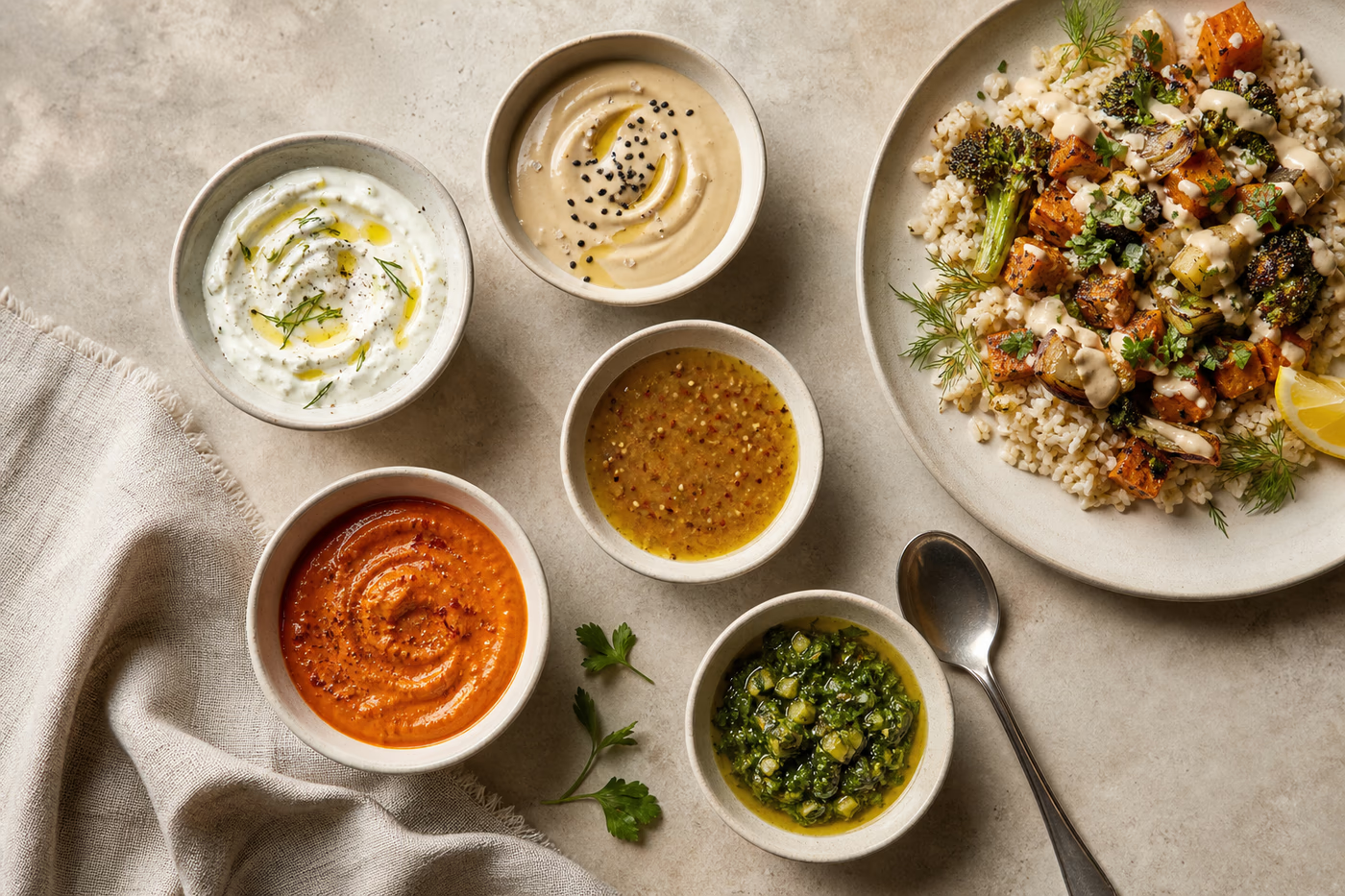
If the lemon-herb finish is the part that saves dinner, keep the small sauce guide nearby. For another seafood dinner with the same quick-cook logic, try sheet pan fish tacos. If you want the fridge and pantry ready for this kind of meal, use the Sunday kitchen reset to check lemons, herbs, potatoes, and freezer backups.
FAQ
Sheet pan salmon questions
Can I cook salmon and potatoes at the same time?
Not usually. Potatoes need a longer roast than salmon, so they should get a head start. Add the salmon once the potatoes are almost tender.
What temperature should salmon be cooked to?
Official food-safety guidance says to cook salmon to 145 F, or until the flesh is no longer translucent and separates easily with a fork.
Can I use frozen salmon?
Yes, but thaw it first. FDA guidance recommends thawing frozen seafood in the refrigerator overnight, or sealed in a bag under cold water if you need a faster option. Pat it dry before cooking.
What if my potatoes are still firm?
Keep the salmon off the pan and roast the potatoes a few more minutes. Add the salmon only when the potatoes are close to tender.
Kitchen Note
About nutrition and timing
Nutrition information is not listed because salmon size, potato amount, oil, mustard, and serving size can change the numbers. If you need exact nutrition details, calculate them with the ingredients you use and your preferred nutrition calculator.
Use the timing cues in the method as your guide. Salmon thickness, potato size, and sheet-pan crowding can shift the final cook time.