
Storage answer
Fridge, counter, or freezer?
- Best move
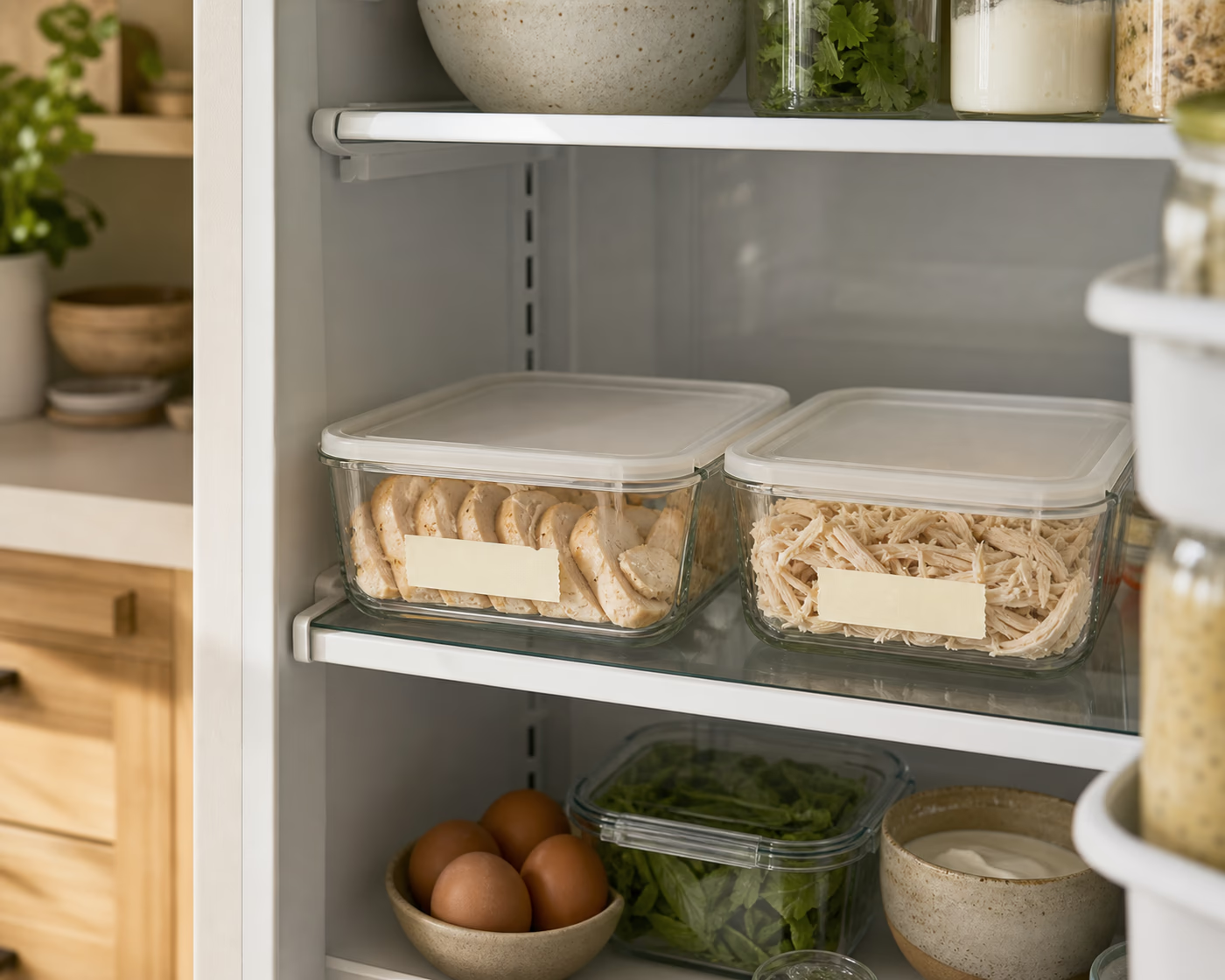
- Refrigerate cooked chicken in shallow airtight containers, label the cooking day, and keep it at 40 F or below.
- Room temp
- Refrigerate within 2 hours, or within 1 hour if the room is hotter than 90 F.
- Fridge
- Cooked chicken lasts 3 to 4 days in the refrigerator.
- Freezer
- Freeze by day 3 if plans change; plain cooked chicken is best within about 3 to 4 months.
Do not keep it if you see
- Past day 4
- Slimy or sticky surface
- Sour or off smell
- Mold or gray-green color changes
- Unknown storage history
Reheat leftovers to 165 F before serving; reheating does not restart the storage clock.
Start Here
Cooked chicken gets 3 to 4 days, counted honestly
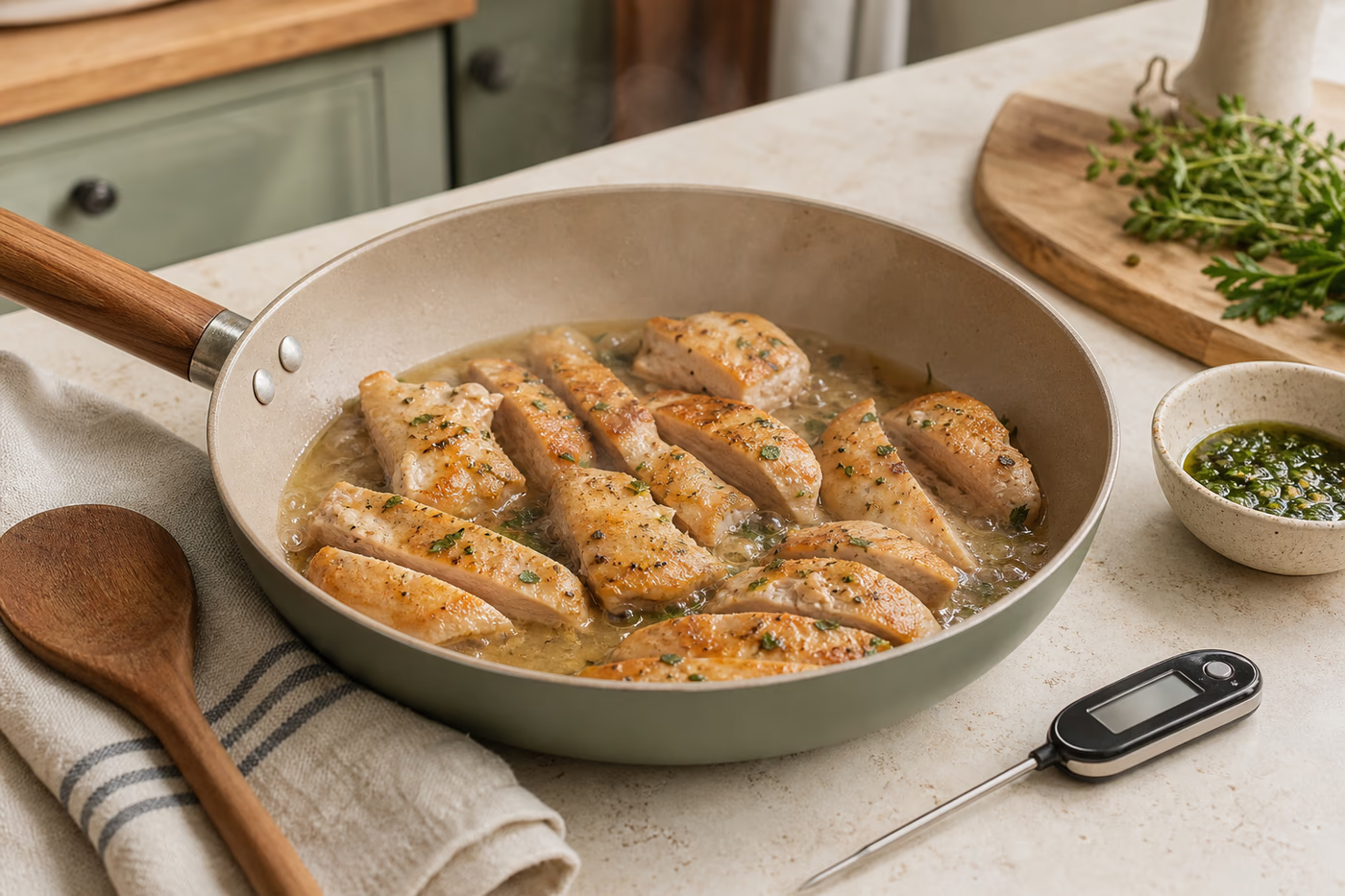
Cooked chicken lasts 3 to 4 days in the refrigerator at 40 F or below. That covers all of it: plain grilled breasts, a rotisserie chicken from the store, fried chicken, shredded meal-prep chicken, and chicken swimming in soup or sauce.
The part most people get wrong is not the number. It is the counting. The day the chicken was cooked is day zero, and the count does not restart when you reheat it, stir it into rice, or move it to a smaller container. In my kitchen, Sunday’s grilled batch shows up in Wednesday’s dinner plans, so the container label does the remembering for me.
Quick Answer
How long does cooked chicken last in the fridge?
Cooked chicken lasts 3 to 4 days in the refrigerator. That is a safety boundary, not a texture preference. The refrigerator slows bacteria down, but it does not stop them, and cooked chicken can become unsafe without looking or smelling any different.
Here is how to count. If you cook chicken on Sunday, Sunday is day zero. Monday is day one, Tuesday is day two, Wednesday is day three, and Thursday is day four, the last day to eat it. Reheating the chicken on Tuesday does not buy Wednesday back. Turning it into a new dish does not reset the clock either. The dish is only as fresh as its oldest ingredient.
If you are already sniffing the container and negotiating, check the day count instead. The count answers faster than your nose, and it is more honest.
Shelf-Life Map
The cooked chicken shelf-life map
The 3 to 4 day rule holds for every kind of cooked chicken. What changes by type is where the chicken came from, how you count, and what the best move is when the week gets away from you.
| Chicken Situation | Fridge Window | Best Move |
|---|---|---|
| Plain cooked pieces (grilled, baked, poached) | 3 to 4 days | Label the cooking day; freeze by day 3 if plans change. |
| Rotisserie chicken | 3 to 4 days from the day it came home | Pull the meat off the bones before storing; it chills faster and packs flatter. |
| Fried chicken | 3 to 4 days | Reheat to re-crisp, but the window does not stretch for breading. |
| Chicken in soup, sauce, or casserole | 3 to 4 days | Freeze a portion on cooking day; freezer quality depends on the dish. |
| Shredded meal-prep chicken | 3 to 4 days | Portion into meal-size containers; freeze half on day zero if the week is uncertain. |
| Commercially packaged cooked chicken, unopened | Package use-by date while sealed | Once opened, treat it like leftovers: 3 to 4 days. |
| Cooked chicken left out overnight | None | Discard it. The fridge cannot rewind counter time. |
Fridge Method
How to store cooked chicken so it lasts the full window
The 3 to 4 day window assumes the chicken was stored well from the start. A batch that sat on the stove all evening never gets the full window.
- Refrigerate within 2 hours. Within 1 hour if the room is hotter than 90 F, like a summer cookout table. Cooked chicken does not need to cool completely on the counter first.
- Use shallow airtight containers. Shallow containers let the chicken chill quickly and evenly instead of holding warmth in the middle.
- Label the lid with the day. Write the cooking day, not just “chicken.” Future-you never remembers which Tuesday.
- Use a shelf, not the door. The back and middle of the refrigerator stay steadier than the door, which warms every time someone opens it.
- Keep the fridge at 40 F or below. An inexpensive appliance thermometer settles the question once instead of every week.
Storing chicken separately from buns, dressing, and toppings also keeps your options open. Plain stored chicken can become chicken salad, a rice bowl, or a quesadilla filling. A fully built sandwich can only become a soggy sandwich.
Freeze
Freezing: the pressure-release valve
The freezer is what keeps the 4-day rule from turning into 9 p.m. math. Frozen at 0 F, cooked chicken stays safe indefinitely. Quality is the only clock: plain cooked chicken tastes best within about 3 to 4 months. Cooked chicken dishes vary, often about 2 to 6 months depending on the dish, with soups and stews closer to 2 to 3 months.
My rule is to freeze on day-2 optimism, not day-4 guilt. If the week’s plans are wobbling on day two, freeze a portion while it is still at its best instead of waiting until the last legal day.
- Portion the chicken into meal-size amounts so you never thaw more than you need.
- Pack it flat in freezer bags or airtight containers, pressing out air.
- Add a splash of broth or sauce to plain pieces if you have it; it protects the texture.
- Label with the contents and the date.
- Thaw in the refrigerator, in cold water, or in the microwave, never on the counter.
Thawed cooked chicken goes back on a short clock: use it within 3 to 4 days if it thawed in the refrigerator, or right away if it thawed in cold water or the microwave. A labeled freezer stash earns its spot in the freezer backup box, where it becomes the dinner that saves a Thursday.
Spoilage
How to tell if cooked chicken is bad
Throw cooked chicken away if it feels slimy or sticky, smells sour or off, shows mold, or has turned gray or greenish. Do not taste it to confirm. A texture change is the most common early warning; chicken that was firm on Sunday and tacky on Wednesday is done.
But here is the boundary that matters more: passing the look-and-smell test does not make old chicken safe. The bacteria that cause food poisoning do not always announce themselves. Chicken past day 4, chicken that sat out too long, and chicken with an unknown history all go in the trash even when they seem fine.
- Slimy or sticky surface: discard; do not rinse and hope.
- Sour or off smell: discard without a taste test.
- Mold or color changes: discard the whole container, not just the spotted piece.
- Past day 4: discard even if it looks and smells normal.
- Unknown history: if nobody knows when it was cooked or how it was stored, choose caution.
Raw Chicken
What about raw chicken?
Raw chicken runs on a stricter clock, and mixing up the two rules is the most common chicken-storage mistake. Raw chicken keeps only 1 to 2 days in the refrigerator, whether it is whole, in parts, or ground.
If dinner plans slip, freeze raw chicken instead of stretching it. For best quality, a whole raw chicken keeps about a year in the freezer, parts about 9 months, and ground chicken 3 to 4 months. Store raw chicken on the lowest shelf in a container or tray so it cannot drip onto anything below, and cook it to 165 F.
Use It Up
What to make while the window is open
The best storage plan is a dinner plan. Chicken inside its window can be reheated gently for bowls and tacos using the reheating guide, folded cold into chicken salad if it was stored promptly and safely, or remixed entirely with the leftover remix ideas so Wednesday does not taste like Sunday again.
If you cook chicken specifically to eat all week, a batch from the grilled chicken marinade stored in shallow labeled containers is the calmest version of meal prep I know. Cook once on day zero, eat through day three, and let the freezer catch whatever the week refuses.
FAQ
Cooked chicken storage questions
Can you eat cooked chicken after 5 days?
No. The safe window is 3 to 4 days in the refrigerator. On day 5, throw it away even if it looks and smells completely normal. Bacteria can reach unsafe levels without changing anything you can see or smell.
Does chicken in soup or sauce last longer in the fridge?
No. Chicken soup, chicken casserole, and chicken in sauce follow the same 3 to 4 day refrigerator rule. The difference shows up in the freezer as quality, not safety: cooked meat or poultry leftovers often have a 2 to 6 month quality window, while soups and stews are usually closer to 2 to 3 months.
How long can cooked chicken sit out at room temperature?
Two hours at most, or 1 hour if the room is hotter than 90 F. The timer runs the whole time the chicken is out, including serving time, and it does not reset when you move the dish. Chicken left out overnight gets discarded, not refrigerated.
Can you refreeze cooked chicken after thawing?
If it thawed in the refrigerator and stayed cold, refreezing is safe, though the texture pays a price each round. Chicken thawed in cold water or the microwave should be eaten right away, not refrozen.
Does vacuum-sealed cooked chicken last longer?
For commercially packaged cooked chicken that is still sealed and properly refrigerated, follow the package use-by date. Once you open it, the normal leftover rule takes over: 3 to 4 days at 40 F or below. Home vacuum-sealed cooked chicken does not reset the leftover clock unless you are following a tested, package-specific process.
Next Steps
Keep the leftover lane calm
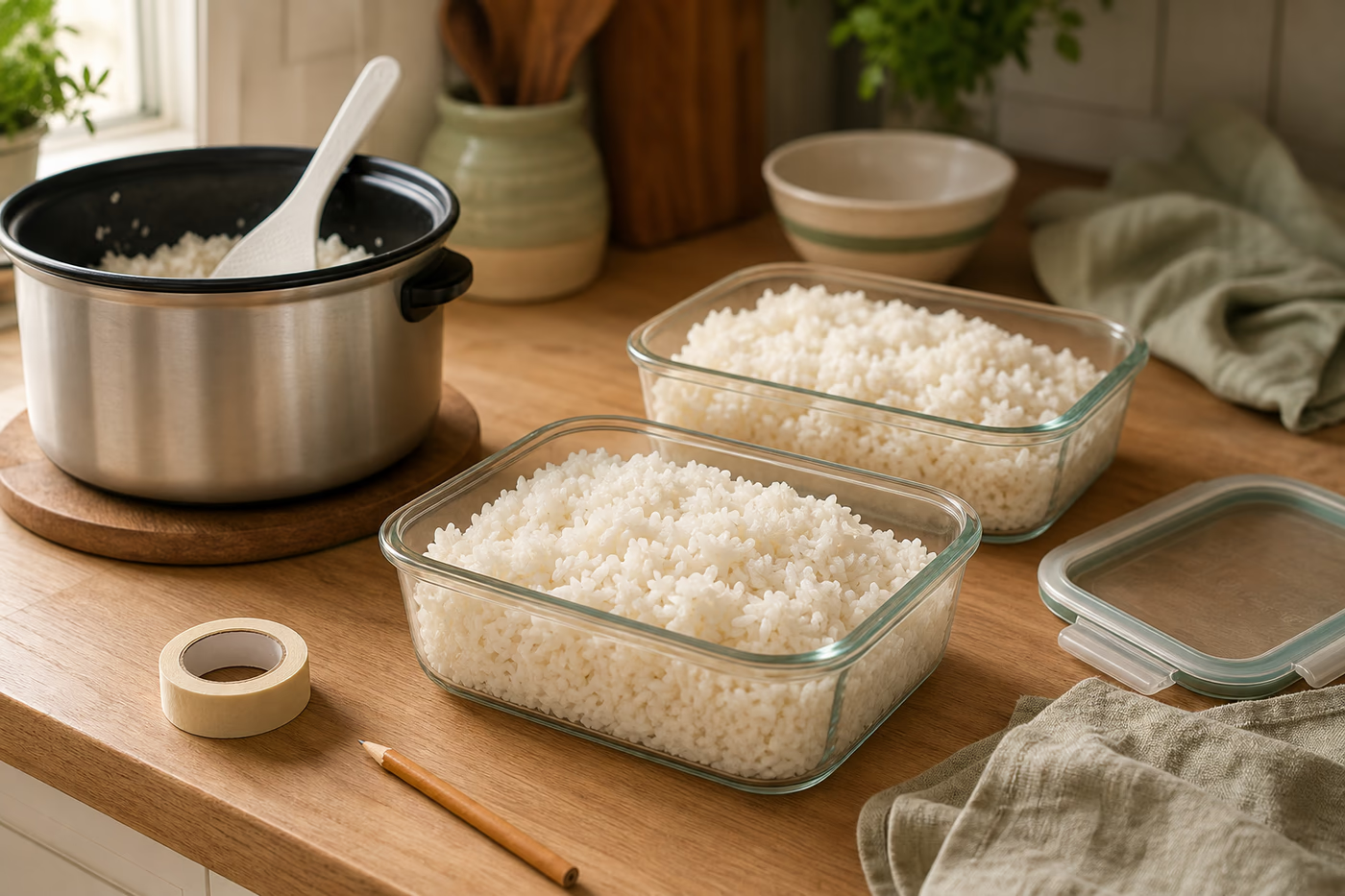
The chicken rule works best as part of a bigger habit: chill fast, label the lid, and let the count answer the question. The same system runs cooked rice storage, which has its own short clock, and the broader safe meal prep guide covers the cook-cool-store routine for everything else in the fridge.
When the chicken is still good and dinner needs to happen, reheat it without drying it out and call it a win. You cooked once and ate three times; that was the whole plan. Label the lid, trust the count, and keep cooking.