
Storage answer
Fridge, counter, or freezer?
- Best move
- Divide soup into shallow meal-size portions, leave headspace, seal and label, then freeze at 0 F or below.
- Room temp
- Refrigerate or freeze promptly within 2 hours, or within 1 hour when the temperature is above 90 F; do not cool a deep pot slowly on the counter.
- Fridge
- Use most properly cooled refrigerated soup within 3 to 4 days.
- Freezer
- Use about 2 to 3 months as a conservative best-quality target; food held continuously at 0 F remains safe while quality declines.
Do not keep it if you see
- Storage history is unknown or the soup sat out past the 2-hour or 1-hour limit
- Container is cracked, leaking, unsealed, or not freezer-safe
- An off smell, mold, or unusual sliminess after thawing
Freezing preserves safely handled food; freezer burn affects quality. Bring soup to a rolling boil and reheat to 165 F throughout.
Start Here
How to freeze soup so it thaws well
Cool the soup promptly in shallow portions, leave room for expansion, seal and label each portion, then freeze it at 0 F or below. When you need dinner, thaw the amount you want in the refrigerator or reheat a suitable frozen portion in a saucepan or microwave.
I freeze soup in the amount I will actually use. One labeled container that can become lunch is a gift. A giant frozen block that needs a chisel is a project I did not ask for.
Quick Answer
Can you freeze soup?
Yes. Most brothy, bean, lentil, chili-style, and vegetable soups freeze well when they were cooled and packed safely. Noodles, rice, potatoes, and creamy soups can still be frozen, but their texture may soften, split, or turn grainy, so a small test portion or a separate starch is often the kinder plan.
Freezing is a storage step, not a safety reset. Soup that sat out too long or has an unknown history should not go into the freezer for future-you to investigate.
Method Map
The cool, portion, protect, recover method
The best way to freeze soup is a short sequence. Each part solves a different freezer problem.
| Step | What to do | What it prevents |
|---|---|---|
| Cool | Divide a large batch into shallow portions and chill it promptly. | A warm deep center that takes too long to cool. |
| Portion | Freeze the amount you will use for one meal or one lunch. | Thawing and refreezing more soup than you need. |
| Protect | Choose a freezer bag, rigid container, or freezer-safe glass; leave expansion room and seal well. | Leaks, freezer burn, and cracked containers. |
| Recover | Thaw safely, reheat thoroughly, and add broth, water, or a fresh finish if the texture needs help. | Flat flavor, thickened starches, and a bowl that feels tired. |
Best Method
What is the best way to freeze soup?
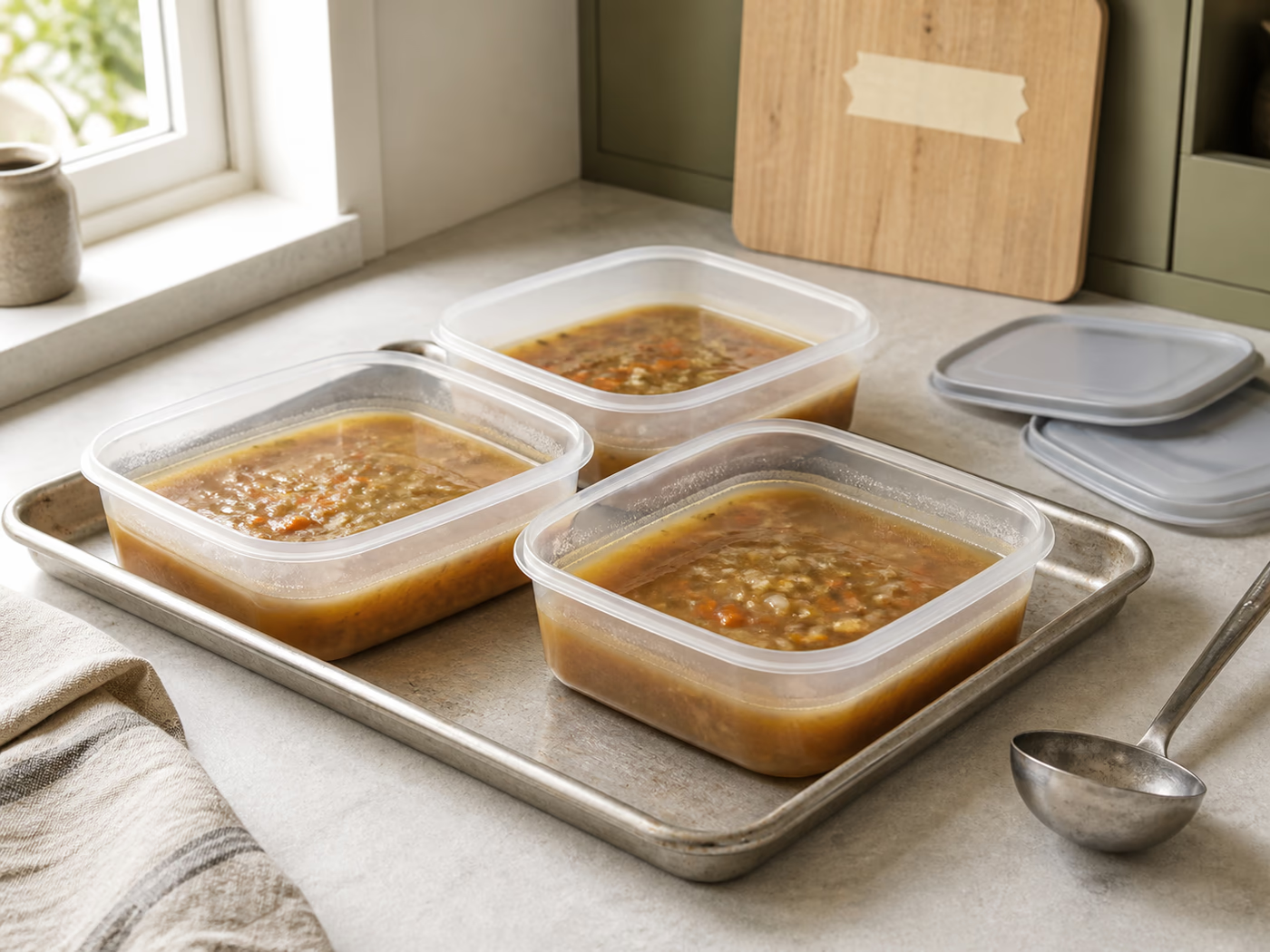
The best method is to portion the soup before freezing, use a container that fits your freezer and your next meal, and label the portion before it disappears into the back. Follow the container maker’s headspace guidance; soup expands as it freezes, so a full-to-the-rim container is asking for a cracked lid or a leak.
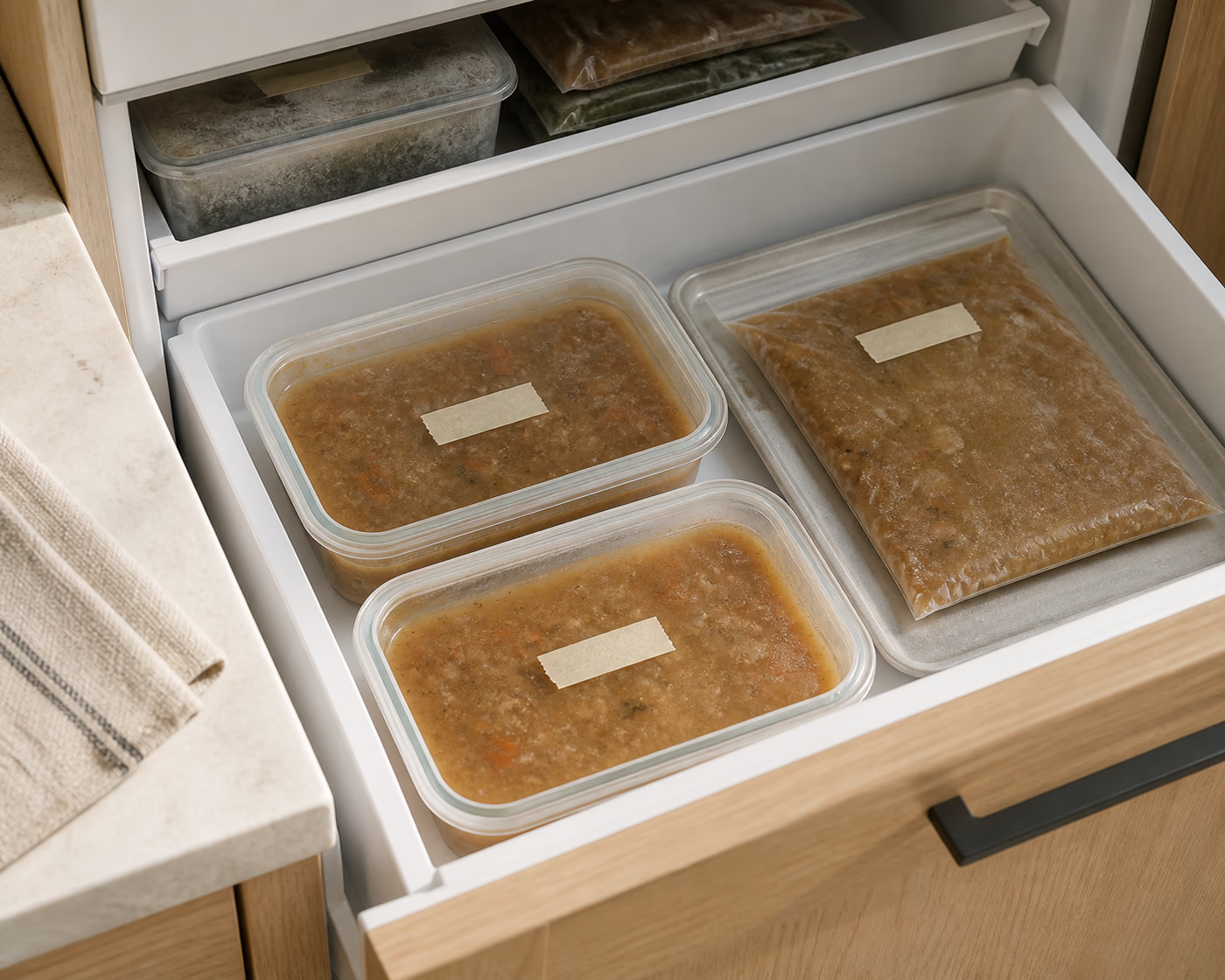
- Divide it: ladle the soup into shallow meal-size containers. A rimmed tray underneath makes the trip to the refrigerator or freezer less stressful.
- Chill promptly: put shallow portions in the refrigerator promptly; hot food may go directly into the refrigerator. Do not leave a deep pot on the counter to cool slowly.
- Leave room: keep the headspace recommended for your bag, container, or freezer-safe glass. Do not fill a jar to the shoulder or a rigid container to the lid.
- Seal the air out: press extra air from freezer bags and close rigid containers firmly. A flat bag freezes in a thin layer; a rigid container stacks more easily and protects against punctures.
- Label now: write the soup name, date, portion size, and a useful note such as “add noodles later” or “finish with lemon.”
- Freeze flat or stack: keep bags flat on a tray until firm. Once frozen, file them upright or stack containers so the oldest portion stays visible.
My label rule is practical: write the next decision, not just the ingredient. “Lentil soup — Aug 25 — add greens after thawing” is much kinder than “soup,” especially at the end of a long day.
Container Map
Freezer bags, containers, or glass?
All three can work when they are made for freezer use and packed with room for expansion. Choose the container based on how much space you have, how far the soup needs to travel, and how much leak protection you want.
| Container | Best for | Watch for |
|---|---|---|
| Freezer bag | Flat storage, small spaces, and fast thawing. | Set it on a tray while freezing; punctures and leaks are harder to spot once the bag is buried. |
| Rigid freezer-safe container | Stackable portions and soups you want protected from freezer knocks. | Leave the maker’s recommended headspace and cool the soup before sealing it tightly. |
| Freezer-safe glass | People who prefer a rigid, reusable container and have room for careful handling. | Use only glass marked freezer-safe, leave expansion room, and avoid thermal shock from hot soup into a cold jar. |
Do not use a random takeout container, a thin sandwich bag, or an ordinary jar simply because it is nearby. The freezer is not the place to learn that plastic becomes brittle or glass dislikes surprises.
Homemade Soup
How do you freeze homemade soup?
Freeze homemade soup by dividing it while it is still easy to portion, cooling it promptly, then packing and labeling the portions before they become a single mystery batch.
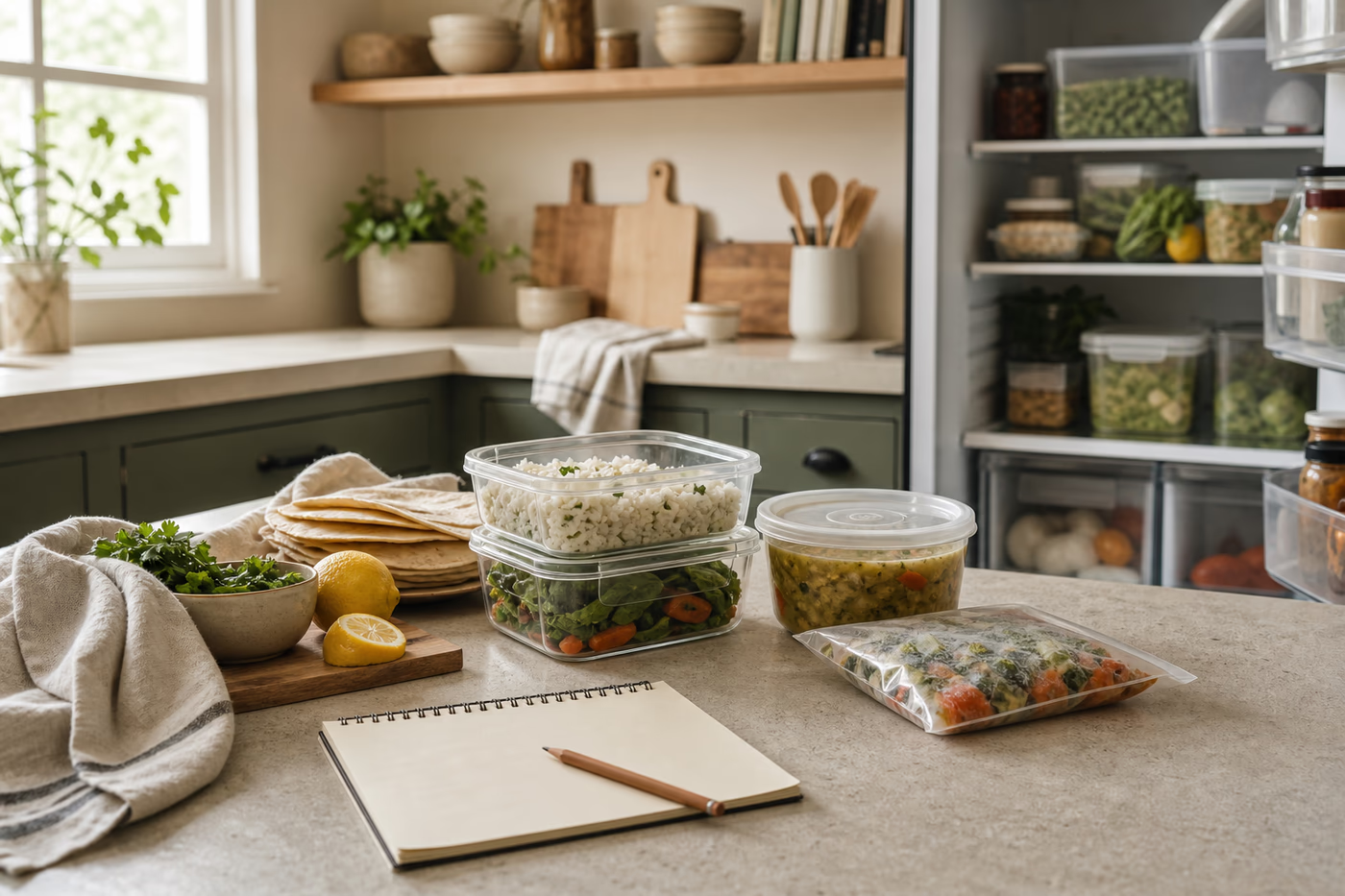
- Save the best texture: if the soup has noodles, rice, or tender herbs, freeze the broth and vegetables separately when that is practical.
- Use meal-size portions: a one- or two-serving container thaws more evenly than a deep family-size block.
- Catch leaks: carry bags and loose-lidded containers on a rimmed tray until they are sealed and firm.
- Make the label useful: include the date and the finish you want after thawing, such as “add cooked noodles,” “thin with broth,” or “top with yogurt.”
- Track the oldest portion: add it to your freezer inventory sheet so it becomes dinner instead of freezer wallpaper.
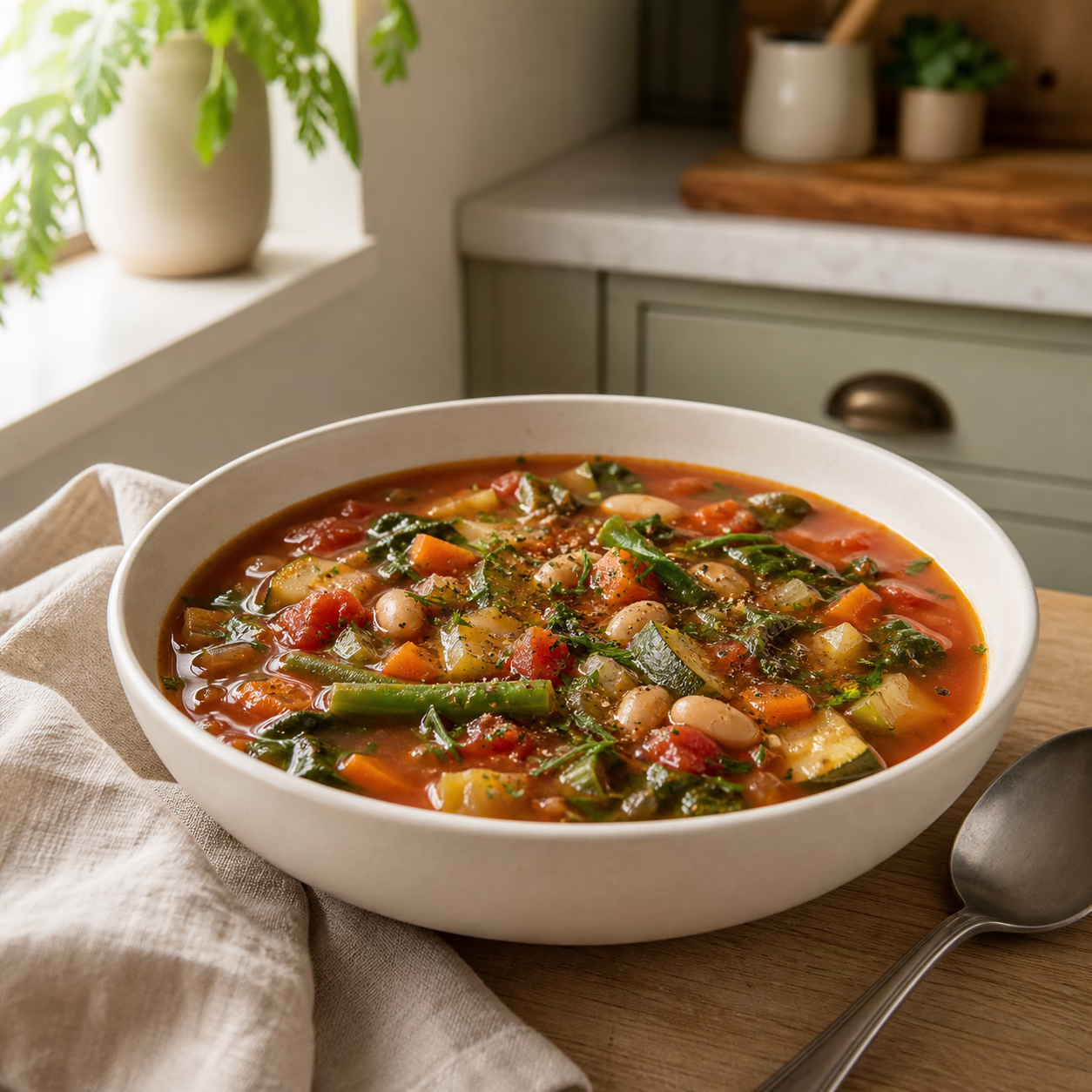
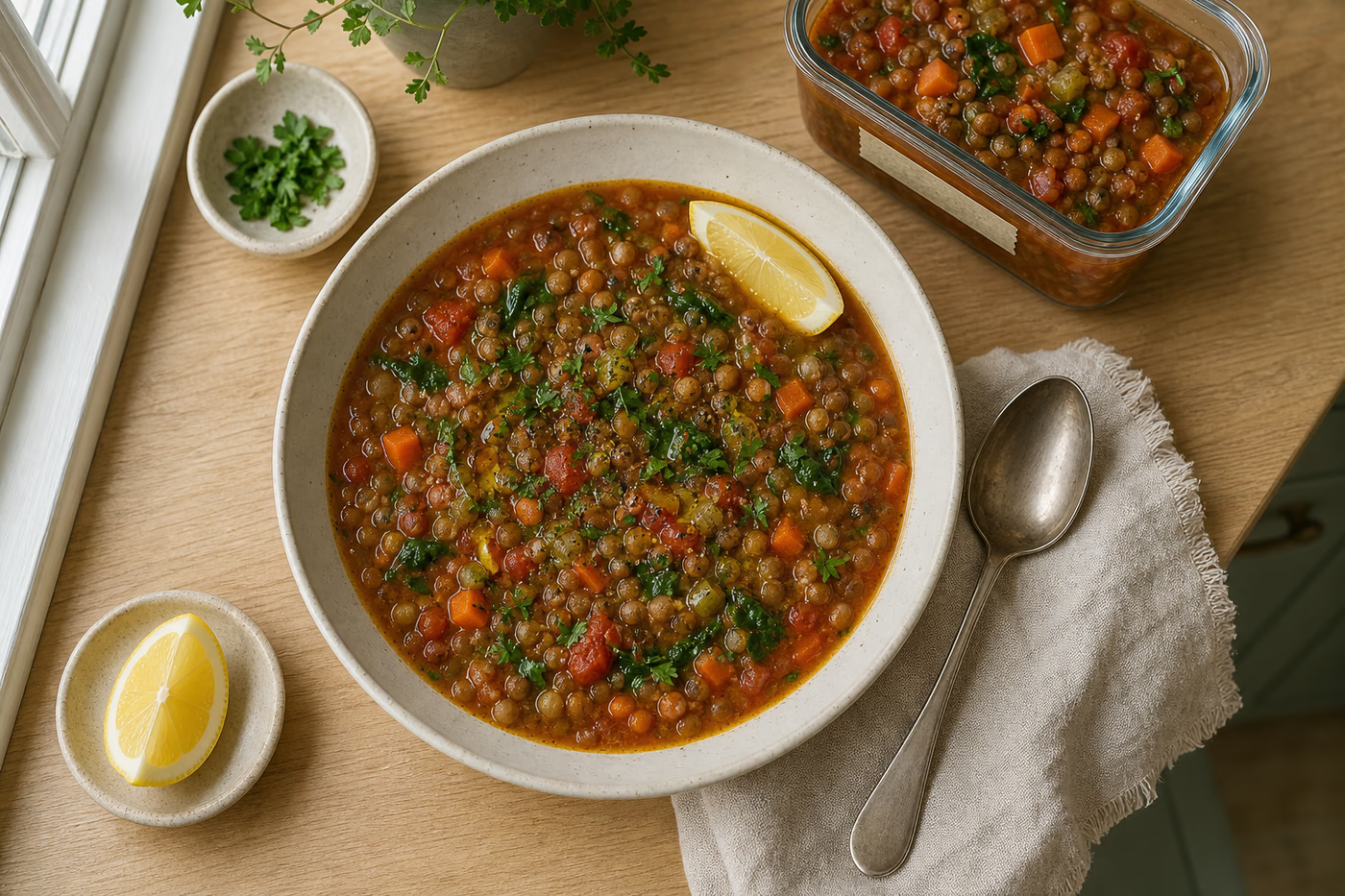
If you are freezing easy vegetable soup, keep the flexible vegetable base in portions and finish each bowl with the herbs or bread you actually want that day. For freezer-friendly pantry lentil soup, the freezer already suits the bean-and-broth texture; portion size and labeling still do the useful work.
Texture Guide
Which soups freeze well?
Brothy, bean, lentil, and chili-style soups usually hold their shape best. Soups with starches or dairy can still be frozen, but plan for a texture change and give yourself a recovery move.
| Soup type | Best freezer plan | After thawing |
|---|---|---|
| Brothy vegetable, bean, lentil, or chili-style soup | Freeze in meal-size portions with headspace. | Stir, reheat thoroughly, and add a splash of broth if it thickened. |
| Soup with pasta or noodles | Freeze the base without noodles when possible. | Add freshly cooked noodles, or expect the noodles to be softer. |
| Soup with rice or other grains | Freeze the broth and vegetables separately from the grain when texture matters. | Thin with broth or water and reheat gently; grains may continue to swell. |
| Soup with potatoes or tender vegetables | Freeze a test portion if the pieces are meant to stay firm. | Expect some softening; mash, blend, or add a fresh vegetable finish if it suits the soup. |
| Creamy, yogurt, or cheese-heavy soup | Freeze a small test portion, or freeze the base before adding the dairy finish. | Whisk gently over low heat; a splash of broth may help, but a split texture may not fully recover. |
| Pureed soup | Use shallow containers and leave headspace. | Stir well and adjust thickness with broth, water, or cream after reheating. |
This is the difference between still safe and still nice. Frozen soup can remain safe while its noodles soften or its cream sauce loses the smooth texture you wanted.
Thaw And Reheat
How do you thaw frozen soup?
Thaw frozen soup in the refrigerator when you have time, use a leak-proof bag in cold water when you can stay with it, or reheat a suitable frozen portion directly in a saucepan or microwave. Do not thaw soup on the counter.
| Route | Use it when | Practical move |
|---|---|---|
| Refrigerator | You can plan a day ahead. | Set the sealed portion on a plate or tray and let it thaw cold. |
| Cold water | You need a quicker thaw and the portion is sealed in a leak-proof bag. | Keep the bag submerged in cold water, change the water every 30 minutes, then reheat immediately. |
| Saucepan from frozen | The portion is in a pan-safe container or bag that can be emptied safely. | Start on low, add a splash of broth or water, cover loosely, and stir as the edges loosen. |
| Microwave | You need one portion quickly and the container is microwave-safe. | Vent the lid, use short intervals, stir between them, and heat until the center reaches 165 F. |
USDA FSIS notes that soup and stew can be reheated from frozen in a saucepan or microwave. Bring the soup to a rolling boil and check that it reaches 165 F throughout. Then taste it: broth, water, fresh herbs, citrus, or a separate starch can bring back the balance that freezing blurred.
Safety And Quality
How long does soup last in the freezer?
Soup kept continuously frozen at 0 F or below stays safe, but about 2 to 3 months is a conservative best-quality target for most homemade soup. That is a quality window, not a safety deadline. Air exposure, freezer burn, starch softening, and split dairy can make a portion less pleasant before it becomes a safety question.
In the refrigerator, use most properly cooled leftover soup within 3 to 4 days. Refrigerate or freeze it within 2 hours, or within 1 hour when the temperature is above 90 F. A deep pot that sat warm too long does not become safe because you finally found freezer space.
For the official temperature and leftover boundaries, see USDA FSIS leftover guidance and USDA FSIS food-safety steps. Reheat leftovers to 165 F.
Avoid
Soup-freezing mistakes that make future dinner harder
The freezer is generous, but it is not magic. These small mistakes create most of the leaks, mystery portions, and disappointing thawed bowls.
- Freezing a deep hot pot: portion it first so it can cool promptly.
- Filling containers to the lid: leave the headspace the container maker recommends.
- Putting hot soup in a cold glass jar: use freezer-safe glass and avoid thermal shock.
- Freezing bags without a tray: a tray catches the leak before it becomes a freezer shelf problem.
- Labeling later: write the soup name, date, and finishing note while the batch is still obvious.
- Freezing delicate extras in the soup: keep noodles, herbs, crunchy toppings, and some dairy finishes separate when texture matters.
- Stretching the safety window: freezer time cannot rescue soup with an unknown or unsafe storage history.
My least glamorous freezer habit is also the one I use most: I leave a little visible space around the portions. A freezer that can be opened without an avalanche is already doing its job.
FAQ
Soup-freezing questions
Can you freeze soup in a plastic container?
Yes, if the container is marked freezer-safe. Leave the recommended headspace, cool the soup promptly, seal it well, and avoid filling it to the lid. A rigid container is useful when you want stackable portions and stronger leak protection.
Can you freeze soup in a mason jar?
Only use a jar specifically marked freezer-safe, leave room for expansion, and let the soup cool before it goes into the jar. Do not use an ordinary jar as a freezer experiment, and do not move a hot jar directly into a cold freezer.
Should soup cool before freezing?
Divide soup into shallow portions and refrigerate promptly, rather than leaving a deep pot on the counter. Hot food may go directly into the refrigerator. Refrigerate or freeze within the safe time boundary.
Can you freeze soup with noodles?
Yes, but noodles usually soften as they sit in broth and may become very soft after thawing. For the best texture, freeze the soup base and add freshly cooked noodles after reheating.
Can you freeze creamy soup?
You can freeze many creamy soups, but cream, yogurt, and cheese can separate or turn grainy. Freeze a small test portion first, or freeze the soup base and add the dairy finish after thawing if the recipe allows it.
Can frozen soup be reheated from frozen?
Yes. USDA FSIS says soup and stew can be reheated from frozen in a saucepan or microwave. Use a suitable container, warm it gently, stir as it loosens, and reheat leftovers to 165 F.
Next Steps
Let the freezer hold dinner, not a mystery
Start with a soup you already like. Easy vegetable soup and freezer-friendly pantry lentil soup are natural first portions because their brothy, bean-and-vegetable textures are forgiving.
For the wider freezer rhythm, pair this guide with the freezer backup box and the freezer inventory sheet. The goal is not a perfect freezer. It is one labeled portion you can find when dinner needs help.